
 From the General Engineering Faculty to the Research and Education Complex “Fundamental Sciences”
The history of Bauman Moscow State Technical University is the history of the development of scientific and technical thought in our country, a chronicle of technical progress and of training highly qualified specialists. Bauman graduates have made a significant contribution to Russian and world science and technology; they include world-famous scientists, engineers, designers and statesmen.
This success was built over almost two centuries by combining fundamental training with practical professional training based on the latest advances in science and technology, and by the high competence of the teaching staff.
The faculty’s roots go back to the 1830s, when physics, mathematics and other natural sciences began to be taught. Only in 1933, however, did the Bauman Moscow Mechanical Engineering Institute (MMMI) form a General Engineering Faculty to provide a high level of science training across all faculties. It existed until 1938, and in 1964, by order of Rector Professor Leonid Pavlovich Lazarev, the General Engineering Faculty (OT) was re-established at Bauman MVTU.
The faculty made it possible to set a single high standard for the first and second years of all degree programmes.
Initially the General Engineering Faculty had 11 departments: higher mathematics, physics, theoretical mechanics, machine parts, descriptive geometry and engineering graphics, theory of mechanisms, chemistry, electrical engineering and electrical equipment, foreign languages, Russian, and physical education. It brought together departments whose traditions and scientific and teaching potential are linked with outstanding scientists and teachers who are the pride of the university and of Russian engineering education: N. E. Zhukovsky, D. Yu. Panov, M. A. Saverin, M. S. Krasinskaya, Kh. A. Arustamov, A. P. Yushkevich, V. A. Gavrilenko, P. P. Lazarev, F. K. Gerke and many others.
The faculty united the departments where the “Russian method” of education was born, combining deep theoretical and strong practical training of future engineers.
The new faculty was formed under its first dean, Mikhail Nikolaevich Ivanov, Professor of the Department of Machine Parts and Doctor of Technical Sciences, who held the post until 1967. Under his leadership the scientific foundations for organizing the training of highly qualified broad-profile engineers were developed.
In 1967 Sergey Arkadyevich Frolov, Professor of the Department of Engineering Graphics and Doctor of Technical Sciences, was appointed dean and led the faculty until 1974.
In these years some departments and laboratories moved into the new building constructed for the Mechanical Engineering Faculty. Rapid progress in science and technology led to the re-equipment of Soviet industry, which required deeper training of engineers in mathematics, physics, chemistry, mechanics and electrical engineering. The faculty developed new curricula and programmes for all specialties. In 1973 the Department of Applied Mathematics was separated from the Department of Higher Mathematics.
In 1974 Yuri Nikolaevich Zorin, Associate Professor, Candidate of Technical Sciences and head of the Department of Electrical Engineering, Electronics and Electrical Equipment, was appointed dean.
Zorin paid great attention to professional development of lecturers and training of highly qualified staff. The faculty’s departments became the national base for professional development of university lecturers.
The faculty’s staff stood at the origins of the concept for building and developing the teaching and laboratory building, and staff of all its departments took part in its construction.
In 1987 the university’s structure was reformed. By the rector’s order the Faculty of Design and Mechanics (K) was abolished: departments K-1, K-2 and K-3 joined the Mechanical Engineering Faculty (M), K-6 the Power Engineering Faculty (E), and K-4 and K-5 the newly created Robotics Faculty (RK).
The same order transferred four departments of the OT faculty to the RK faculty: Drawing and Descriptive Geometry, Theory of Mechanisms and Machines, Machine Parts, and Computer-Aided Design Systems.
1988 brought further structural changes: degree training began to be organized on the principle of integrating education, research and industry within research and education complexes (NUK).
The Research and Education Complex “Fundamental Sciences” (NUK FN) included the Faculty of Fundamental Sciences, made up of the nine OT departments remaining after the 1987 reform, and the Research Institute of Applied Mathematics and Mechanics (NIIPMM). The institute’s first director was Vitaly Vasilyevich Savichev, Honoured Scientist of the Russian Federation, Professor and Doctor of Technical Sciences.
Posts of vice-rectors for academic affairs of the research and education complexes were introduced.
The first vice-rector of NUK FN was Vladimir Stepanovich Zarubin, Professor, Doctor of Technical Sciences and head of the Department of Applied Mathematics.
A leading specialist in mathematical modelling of thermomechanical processes in structural materials and heat-stressed structures and an MVTU graduate of 1957, Zarubin made a major contribution to new curricula and programmes that took into account the needs of the degree-awarding departments.
From 1986 to 1991 the rector of MVTU was A. S. Eliseev.
In 1989, for outstanding services to higher technical education, the School became the first technical university in the USSR to receive the status of State Technical University. Since then it has been called Bauman Moscow State Technical University.
Vladimir Georgievich Kinelev, Professor of the Department of Theoretical Mechanics and Doctor of Technical Sciences, was appointed vice-rector of NUK FN.
An MVTU graduate of 1968 and a leading specialist in the theory of liquid cavitation and its applications to liquid-propellant rocket engines, Kinelev formulated the methodological foundations of education at a Russian technical university and prepared the scientific basis for the later reform of Russian higher education.
In 1990 Kinelev was appointed First Deputy Chairman of the RSFSR State Committee for Science and Higher Education, and NUK FN was headed by Boris Petrovich Nazarenko, Associate Professor of the Department of Theoretical Mechanics and Candidate of Technical Sciences.
An MVTU graduate of 1966 and a specialist in the motion theory of all-terrain vehicles, Nazarenko continued creating the conditions for the complex to train its own students and introduced the latest information technologies into teaching.
In 1991 Professor Igor Borisovich Fedorov, Doctor of Technical Sciences, was elected rector. A new chapter in the university’s history brought a new concept of university technical education in line with state educational standards.
In 1992 the mathematics departments began training engineers in Applied Mathematics, and NUK FN became a degree-awarding complex. In 1997 the rector’s order formed four departments: Higher Mathematics, Applied Mathematics, Operations Research and Systems Analysis.
In 2000 the Department of Physics began a bachelor’s programme in Technical Physics, and the Department of Foreign Languages began training bachelors in Linguistics as a second degree.
In 2003 three new departments were created on the basis of the Department of Foreign Languages and formed the new Faculty of Linguistics (L).
By the end of 2003 the teaching and laboratory building was completed, and the departments moved into new premises, improving the quality of teaching.
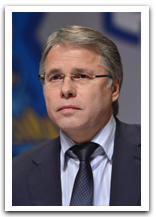
In 2011 Professor Anatoly Aleksandrovich Aleksandrov, Doctor of Technical Sciences, was elected rector.
The university set out to create unique world-class research centres and laboratories and to renew its teaching and production facilities.
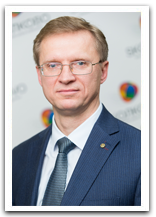
In 2012 Vladimir Olegovich Gladyshev, Doctor of Physical and Mathematical Sciences and Professor of the Department of Physics, was appointed head of NUK FN.
Today the Research and Education Complex “Fundamental Sciences” comprises two faculties — the Faculty of Fundamental Sciences (twelve departments) and the Faculty of Linguistics (four departments) — and the Research Division (three research laboratories).
Faculty of Fundamental Sciences:
FN-7 – Department of Electrical Engineering and Industrial Electronics;
FN-11 – Department of Computational Mathematics and Mathematical Physics;
Faculty of Linguistics:
L-1 – Department of Russian;
L-2 – Department of English for Instrument Engineering;
L-3 – Department of English for Mechanical Engineering;
L-4 – Department of Romance and Germanic Languages.
– Remote Sensing Laboratory;
– Laboratory of Nonlinear Wave Processes;
– Laboratory of Mathematical Modelling of Nonlinear Dynamic Systems.
In recent years NUK FN has created new programmes for all degree-awarding faculties, allowing the university to move to the two-level bachelor–master system in most fields.
Since 2012 the departments have used a modular rating system, with supervised independent work as an additional form of study. The right combination of methodological, teaching and organizational work has ensured uniform requirements and high-quality training in all of the university’s specialties.
In 2014 the “House of Physics” with state-of-the-art teaching equipment was created at NUK FN, and the FN-7 department received new, fully re-equipped premises.
Admission to physics and mathematics programmes is being actively expanded: since 2011 intake at NUK FN has more than doubled, and two new programmes have opened, Mathematics and Computer Science and Applied Linguistics.
The number of staff involved in research has grown noticeably; two new research laboratories have been created, the Simplex research and education centre has been established at FN-11, and the Bauman MSTU Centre of Applied Physics is developing actively at FN-4.
Great attention is paid to publication activity: over the last three years the number of staff publications has doubled, and the level of research has risen significantly. In 2014, 40% of Bauman MSTU publications indexed in international databases were by NUK FN scientists. From 2012 to 2015 NUK FN held 12 international and national research conferences, and in 2014 the FN-11 department launched the new journal “Mathematical Modelling and Computational Methods”.
In 2014 the university celebrated the 50th anniversary of the Research and Education Complex “Fundamental Sciences”, its largest division, whose history goes back to the 1830s — a history of the country’s development, of overcoming difficulties and of victories. Today more than 600 full-time lecturers of the complex carry out productive teaching and educational work, among them 11 academicians and corresponding members, 52 professors and about 240 associate professors — a strong, close-knit team able to solve the most complex problems facing science and higher education.
The departments are led by major scientists and experienced, internationally recognized teachers. The research laboratories carry out unique theoretical and experimental work that attracts a new generation of Bauman students; many discover a passion for research in their first years and decide to connect their future with the university. This gives us confidence that new exciting chapters await in the history of new technology and of our university!