FN-7Research
History and present day
Early history
Electrical engineering at the Imperial Moscow Technical School (IMTU) began at the Department of Physics in 1887, when a physics laboratory course was created at this higher technical school. The course was compulsory for students of the Chemistry Division and optional for students of the Mechanical Division. In 1894, on the initiative of Prof. V. S. Shcheglyaev, it was extended, especially in electrical phenomena. From 1895 it was planned to add a special course in electrical engineering to the curriculum, expand practical classes and introduce design work, but there were not enough rooms and equipment. In 1897 it was therefore decided to create the Physics and Electrical Engineering Institute, which opened in 1902. In 1904 the electrical part of the laboratory course became a separate electrical engineering laboratory.
At that time training in electrical engineering in Russia was concentrated mainly in higher military schools, so IMTU became practically the first Russian civilian engineering university with a research and teaching school of electrical engineering at the beginning of the 20th century.
The foundations of the Moscow school of electrical engineering were laid by Boris Ivanovich Ugrimov, Professor of the Department of Physics, who in 1898 became the first in Moscow to lecture on electrical engineering, at the IMTU Mechanical Division. Besides general electrical engineering and the fundamentals of force fields, he later taught the special courses “Transformer design” (1900–1910) and “High-voltage engineering” (from 1914). He also initiated the Electrical Engineering Laboratory (1902–1904), which he headed until 1910.
In 1901–1905 the IMTU Mechanical Division began training engineers in electrical specialties; the electrical engineering specialization was established in 1905. Students who chose it attended and passed electrical engineering courses, did a set laboratory course and devoted their diploma projects to electrical problems (for example, the design of a central power station or an electric tram).
From 1902 to 1905 IMTU established the departments of Theoretical Foundations of Electrical Engineering, Electrical Machines, Electrical Networks and others, and an Electrical Engineering Division was organized.
One of the founders of the IMTU school of electrical engineering was Karl Adolfovich Krug, an 1898 IMTU graduate, who took an active part in creating the specialization.
In 1905–1917, as the specialization grew stronger, IMTU created a number of laboratories and invited well-known specialists to lecture, such as N. I. Sushkin (“Power stations”), O. A. Peshel, B. I. Ugrimov and K. I. Shenfer (“Electrical machines”). Krug himself lectured on “Theory of alternating currents”, “Fundamentals of electrical engineering”, “Electrical measurements”, “Design of induction motors” and others, and decided the main questions of organizing and developing the specialization.
In 1915 IMTU created the Electrical Engineering Division, and in 1918 the Electrical Engineering Faculty was established on its basis, with K. A. Krug as its first dean.
In 1930 the Moscow Power Engineering Institute (MEI) and the Moscow Electrical Engineering Institute of Communications (MEIS) were created on the basis of the MVTU Electrical Engineering Faculty.
Only the Department of General Electrical Engineering remained at MVTU, headed from 1930 to 1933 by Prof. M. A. Perekalin. A new stage began in 1933, when the department was headed by Vasily Petrovich Nikitin, Honoured Scientist of the RSFSR, Academician of the USSR Academy of Sciences and a prominent scientist in electromechanics and electric welding equipment, who led it until 1956. From 1933, besides general electrical engineering, courses were created on the electrical equipment of machine tools (Prof. I. V. Kharizomenov, later Prof. D. N. Lipatov), rolling mills (Prof. N. P. Kunitsky), forging and pressing machines (Prof. A. E. Golovan, then Assoc. Prof. G. N. Glagolev), lifting and handling equipment (Professors L. F. Shklyarsky and V. N. Petrov and Assoc. Prof. Yu. M. Borisov), electric welding equipment (Academician V. P. Nikitin, Prof. O. N. Bratkova), automotive and tractor equipment (Assoc. Prof. S. Ya. Altman) and other special courses. Until 1935 the department had no laboratories. In 1935 its General Electrical Engineering Laboratory opened with two sections: Electrical Engineering and Electrical Machines. From 1936–1937 the department had laboratories of general electrical engineering, of electric drives and electrical equipment for various specialties, and of automotive electrical equipment. By then it was called the Department of Electrical Engineering and Electrical Equipment. In 1939–1943 it created courses on the electrical equipment of special systems; in 1943 these were transferred to the Department of Special Electrical Engineering of the MVTU Instrument Engineering Faculty.
From 1956 to 1969 the department was headed by Prof. Olga Nikolaevna Bratkova. With the growth of instrument engineering specialties at MVTU, the department has taught “Theoretical foundations of electrical engineering” since 1945. In 1962 “Industrial electronics” became a separate part of the general electrical engineering course, and in 1963 an Industrial Electronics laboratory was organized. The department was renamed Electrical Engineering, Electronics and Electrical Equipment.
In 1966 some disciplines were separated from it to form a new Department of Theoretical Foundations of Electrical Engineering.
In 1969 the department was headed by Vladimir Alekseevich Svyatoslavsky, Associate Professor and Candidate of Technical Sciences, a well-known specialist in electric drive control systems.
From 1974 to 2006 it was led by Prof. Yuri Nikolaevich Zorin, Doctor of Technical Sciences, a specialist in the automation of electron-beam welding.
Since 2006 the Department of Electrical Engineering and Industrial Electronics has been headed by Prof. Alexander Borisovich Krasovsky, Doctor of Technical Sciences, an MEI graduate and leading specialist in simulation of switched reluctance machines and electric drives. In 2015 he published the textbook “Fundamentals of electric drives”.
In 2014, with the introduction of new-generation degree programmes and to strengthen interdisciplinary links, the Department of Theoretical Foundations of Electrical Engineering (RL-4, NUK RLM) was merged into FN-7, keeping the name Electrical Engineering and Industrial Electronics.
In 2024 FN-7 began awarding degrees, admitting its first students to the specialization “Automated Electric Drive”.
Key dates
1897 – decision to create the Physics and Electrical Engineering Institute.
1899 – B. I. Ugrimov began lecturing on electrical engineering.
1902 – the Physics and Electrical Engineering Institute opened.
1904 – a separate Electrical Engineering Laboratory was separated from the Physics laboratory; electrical research was carried out there under Prof. P. P. Lazarev.
1902–1905 – the departments of Theoretical Foundations of Electrical Engineering, Electrical Machines, Electrical Networks and others were established; IMTU began training engineers in electrical specialties.
1915 – the Electrical Engineering Division was created.
1918 – the Electrical Engineering Faculty was created.
1930 – MEI and MEIS were created on the basis of the Electrical Engineering Faculty; the Department of General Electrical Engineering remained at MVTU.
1930–1933 – the department was headed by Prof. M. A. Perekalin.
1933–1956 – the department was headed by Academician V. P. Nikitin
1937 – the department was renamed Electrical Engineering and Electrical Equipment.
1945 – lectures on “Theoretical foundations of electrical engineering” began.
1956–1969 – the department was headed by Prof. O. N. Bratkova.
1962 – lectures on “Industrial electronics” began.
1963 – the department was renamed Electrical Engineering, Electronics and Electrical Equipment.
1966 – the new Department of Theoretical Foundations of Electrical Engineering was organized.
1969–1974 – the department was headed by Assoc. Prof. V. A. Svyatoslavsky, a well-known specialist in electric drive control systems.
1974–2006 – the department was headed by Prof. Yu. N. Zorin, a specialist in the automation of electron-beam welding.
2006 – present – the department is headed by Prof. A. B. Krasovsky, Doctor of Technical Sciences, a leading specialist in simulation of switched reluctance machines and electric drives.
2014 – the Department of Theoretical Foundations of Electrical Engineering was merged into FN-7, keeping the name Electrical Engineering and Industrial Electronics.
2024 – FN-7 began awarding degrees and admitted students to the specialization “Automated Electric Drive”.
Dear applicants!
Welcome to the page of the Department of Electrical Engineering and Industrial Electronics, one of the University’s oldest departments!
 Our department, created in the first years of the 20th century, has a glorious history! It and the Electrical Engineering Faculty later built on it stood at the origins of the widely recognized Moscow school of electrical engineering. World-class scientists worked here: Academician V. P. Nikitin, Professors K. I. Shenfer, K. A. Krug and many others. In the early 1930s our department, as part of the Electrical Engineering Faculty, became the basis of the specialized electrical engineering university created by government decision – the Moscow Power Engineering Institute (MEI). In the following years the department temporarily stopped awarding degrees but was entrusted with a very important mission: providing basic and specialized electrical engineering training for graduates of practically all the University’s programmes.
Today the department’s teaching and research staff have the experience, knowledge and skills needed in electrical engineering, electrical machines, electronics and electric drives. Responding to the challenges of the time, our lecturers are ready once again to use their potential to train first-class electrical engineers!
2024 opened a new chapter for the department and the University as a whole: we began admitting students to Electric Power and Electrical Engineering with the specialization Electric Drives and Automation. This is one of the most sought-after engineering profiles and has stayed relevant for many years, developing in line with modern trends in transport, process automation and control systems.
Renowned scientists, modern laboratories, high-quality education – we have it all!
Don’t miss your chance to write yourself into the renewed history of Bauman University with the FN-7 Department! Studying with us, you will receive a fundamental education in the best traditions of Bauman University and, on graduating, a diploma from one of the country’s most prestigious technical universities!
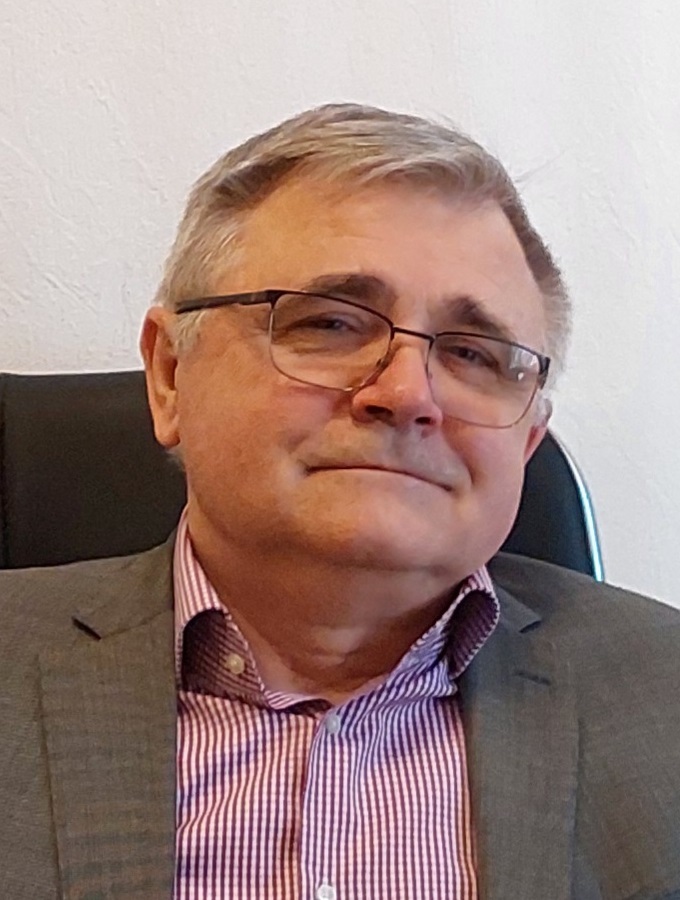
Head of the department, Doctor of Technical Sciences, Professor Alexander Borisovich Krasovsky
We look forward to seeing you at FN-7!
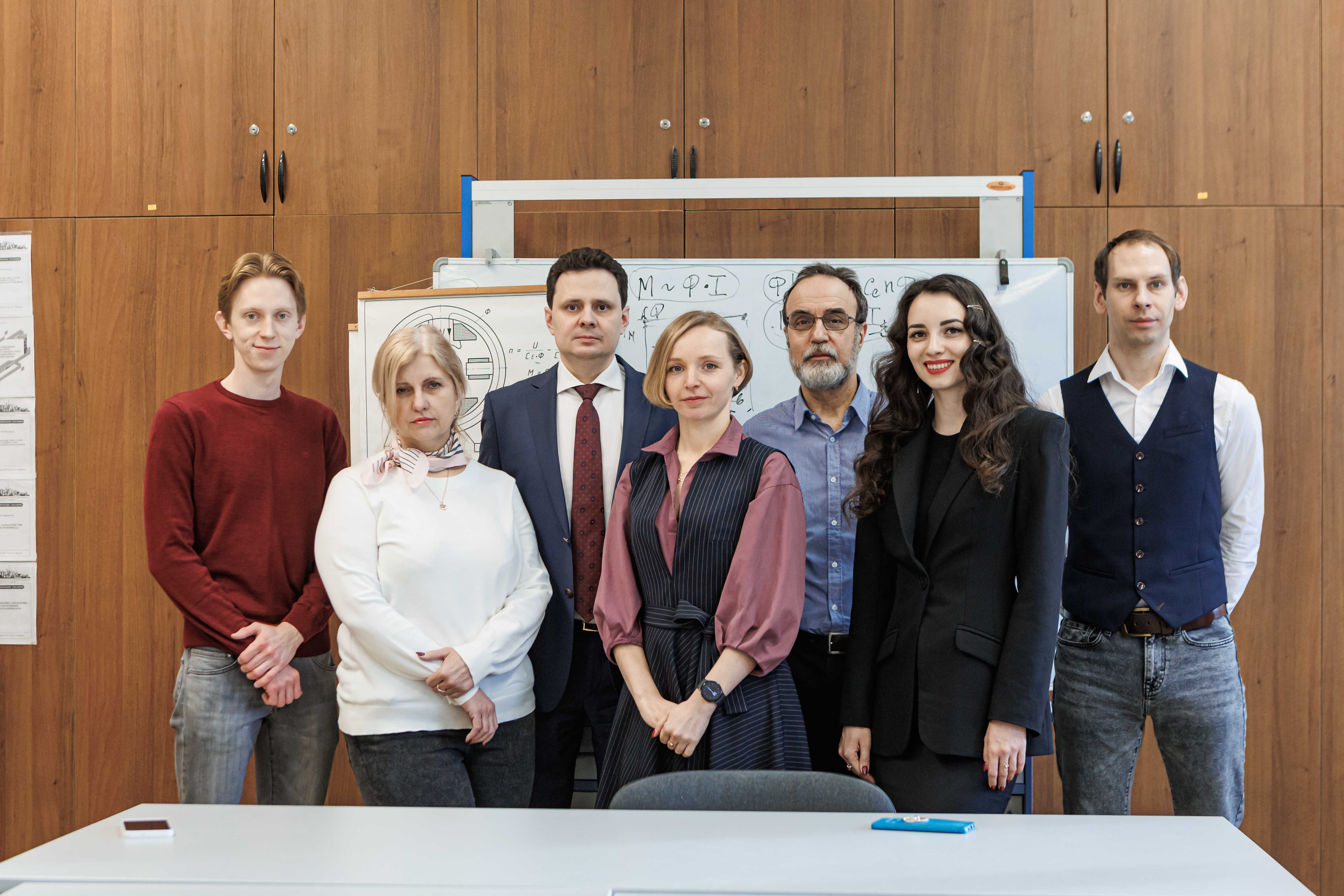
Information for applicants Field of study: 13.03.02 Electric Power and Electrical Engineering Specialization: Electric Drives and Automation
The programme is connected with a highly relevant and sought-after field: developing systems and devices for controlled electromechanical energy conversion. A research and education centre for the automation of advanced technologies and systems (electromechanical systems) is being created at the department; its products will be highly efficient electromechanical and electronic energy converters and control methods and algorithms.
The programme includes basic and specialized disciplines. Students will learn modern methods of electric circuit analysis and gain fundamental knowledge of automatic control theory, microprocessor and power control electronics, electrical machine design, electric drive control systems, and electric drive commissioning and diagnostics. Basic training includes “Theoretical foundations of electrical engineering”, “Automatic control theory”, “Electrical machines”, “Electric drives”, “Electrical and electronic apparatus” and others.
Under the guidance of department staff, students can do research, publish papers, and take part in Russian and international conferences, exhibitions of scientific and technical creativity and so on.
Careers after graduation
· Design engineer for electromechanical devices and systems
· Research engineer in control systems
· Commissioning engineer for electrical systems
· Development engineer
Where automated electric drives are used
· Robotics
· Assembly and machining equipment
· Electric and hybrid transport
· Special-purpose vehicles
 Industrial partners
· Transmashholding;
· Drive Technology Research Centre (NTC Privodnaya Tekhnika).
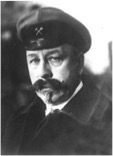 Electrical engineering emerged as a separate scientific discipline at the beginning of the 20th century. In 1898 physics professor B. I. Ugrimov gave the first lecture course on electrical engineering in the mechanical division of IMTU. In 1901–1905 the mechanical division began training engineers in electrical specialties, and in 1902 a well-equipped electrical laboratory was set up. Electrical departments were founded: theoretical foundations of electrical engineering, electrical machines, electrical networks and others, and an electrical division was organized in 1915.
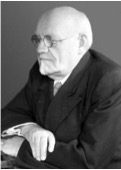 In 1918 the electrical division of MVTU became the Faculty of Electrical Engineering; its first dean was Professor K. A. Krug. As dean, Krug involved young specialists in teaching and engineering research, many of whom later became prominent electrical scientists. Thanks to the organizational, research and teaching work of Professors B. I. Ugrimov, K. A. Krug, K. I. Shenfer and others in the first quarter of the 20th century, the Moscow school of electrical engineering was created and flourished.
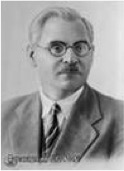 A new stage began in 1933, when the department was headed by Academician V. P. Nikitin, Honoured Scientist of the RSFSR. Between 1933 and 1956 there were major changes. Besides general electrical engineering, new courses were created: electrical equipment of machine tools (Professor I. V. Kharizomenov), rolling mills (Professor N. P. Kunitsky), forging and pressing machines (Professor A. T. Golovan), lifting and handling equipment (Professors L. F. Shklyarsky and V. N. Petrov, Associate Professor Yu. M. Borisov), electric welding equipment (Academician V. P. Nikitin, Professor O. N. Bratkova), automotive equipment (Associate Professor S. Ya. Altman) and others. In 1935 a general electrical engineering laboratory opened for the electrical engineering and electrical machines courses. This period is closely linked with a large group of lecturers who left a notable mark on the department’s history (Associate Professors L. E. Alekin, Yu. M. Borisov, Yu. E. Nitusov and L. L. Ivanov, Professor L. F. Shklyarsky).
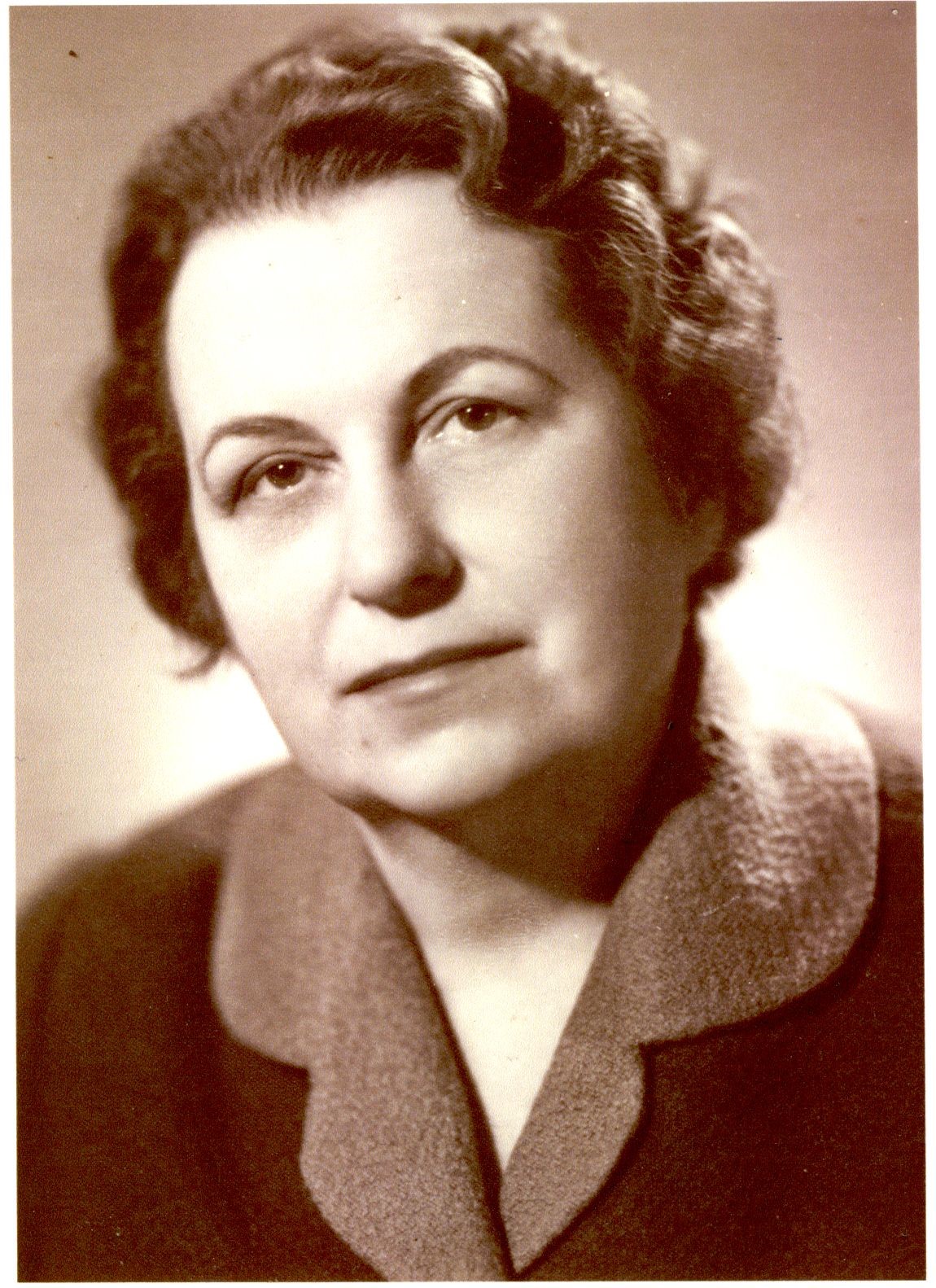 From 1956 to 1969, under Professor O. N. Bratkova, Doctor of Technical Sciences, the Department of Electrical Engineering and Electrical Equipment developed further. In 1962 industrial electronics became a separate part of the general electrical engineering course. The laboratory facilities for general electrical engineering, electric drives and electrical equipment were considerably modernized and expanded, and in 1963 an industrial electronics laboratory was set up. The lecturers produced many teaching guides on using technical means to check students’ knowledge in laboratory classes. The department pioneered a new form of student participation — olympiads in electrical engineering, held at MVTU for more than 40 years. They were started by Professor D. N. Lipatov, who created an original set of circuit analysis problems.
In 1969 the department was headed by Associate Professor V. A. Svyatoslavsky, Candidate of Technical Sciences, a well-known specialist in electric drive control systems. His long experience at the All-Union Research Institute of Electric Drives helped strengthen the department’s ties with industry.
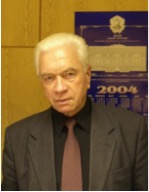 From 1974 to 2006 the department was headed by Professor Yu. N. Zorin, Doctor of Technical Sciences. In 1978–1990, with the help of the Moscow Electrical Engineering College, a jig boring plant and the Bauman MSTU experimental plant, the department created teaching laboratories of electric circuits, electrical machines, analogue and digital electronics, and a set of electric drive experiments. In recognition of the research of its staff (V. I. Matveev, V. N. Atamanov, G. N. Kruglov, A. V. Lukashev and V. A. Kalimulin), an industry research laboratory of special process equipment was established in 1985; its work produced equipment for micro-welding and micro-soldering. From 1987 the department developed the use of computers in teaching, creating five computer-based colloquia covering the course material; in 1990–1997 these tests in “Electrical Engineering and Electronics” were held in the special computer rooms of the “Aquarium”. Since 2000 the department has been introducing an automated learning system, the basis for distance learning in electrical disciplines (starting with electric and magnetic circuits), built around an electronic lecture course.
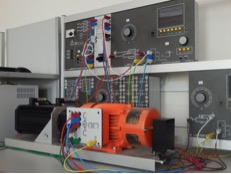
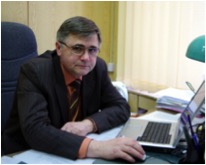 Since 2006 the department has been headed by Professor A. B. Krasovsky, Doctor of Technical Sciences. In 2014, with the introduction of new-generation curricula and to ensure uniform requirements for basic and specialized electrical training, the Department of Theoretical Foundations of Electrical Engineering (RL-4) was merged into FN-7, which kept its name. The Department of Electrical Engineering and Industrial Electronics provides general electrical engineering training at all faculties and branches of Bauman MSTU. Under Professor Krasovsky the courses are continually improved, new programmes have been developed for the two-level system of higher education, and the laboratories keep developing. In 2010–2013 several leading lecturers (Professor A. B. Krasovsky, head of the group; Professors S. A. Vasyukov and V. A. Solovyev; Associate Professors O. I. Miseyuk, V. A. Sobolev and Yu. V. Trunin) completed an internship at Lucas-Nülle in Kerpen, Germany, to study advanced training rigs. Thanks to cooperation between FN-7, Lucas-Nülle and Rosuchpribor, with the support of the university leadership, two modern laboratories were created in 2012–2013: electrical machines and electric drives.
.  The department conducts extensive research in the following areas: “Research and development of non-traditional discrete electric drive systems based on modern computer technologies” (Professor A. B. Krasovsky), “Primary information sensors for motion control systems based on precision electrostatic suspensions” (Professor S. A. Vasyukov), and “Research and development of systems with continuous current control of brushless motors and secondary power supplies for brushless drives” (Professor V. A. Solovyev).
The department runs a permanent postgraduate programme. From 1956 to 2019, 6 doctoral theses (O. N. Bratkova, L. F. Shklyarsky, Yu. N. Zorin, G. F. Drobyshev, A. B. Krasovsky, S. A. Vasyukov) and 45 candidate theses were defended. Student Science Spring conferences are held regularly, and more than 100 students take part in electrical engineering olympiads every year.
Address:
5/1 2nd Baumanskaya St., Moscow
Phone:
+7 (499) 2636399
+7 (499) 2636564
Email:
Website of Tatyana Olegovna Knyazkova. Lecture course “Electrical engineering and electronics”, recommended for full-time and part-time students of various specialties