The Department of Higher Mathematics of Bauman Moscow State Technical University is a leading centre for training specialists in fundamental research in applied mathematics, computational mathematics and computer science.
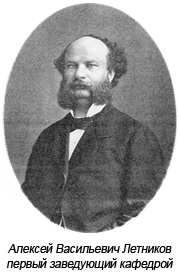
The department was founded in 1868. Over the years it has developed leading Russian scientific schools in various areas of applied mathematics and computer science. Its staff have included outstanding mathematicians: corresponding members of the St. Petersburg Academy of Sciences (N. E. Zhukovsky, A. V. Letnikov, K. A. Andreev), corresponding members of the USSR Academy of Sciences (A. Ya. Khinchin, A. O. Gelfond, Ya. N. Shpilrein), future academicians of the USSR Academy of Sciences (I. G. Petrovsky, M. A. Lavrentyev, S. A. Chaplygin), and other major scientists in fundamental and applied mathematics.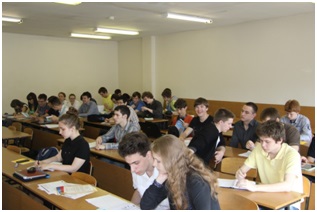 The department trains bachelors and masters in Applied Mathematics. Its aim is to prepare highly qualified specialists able to work successfully in new economic and political conditions and to solve problems involving knowledge-intensive research and technologies in strategically important areas, including integrated mathematical software for technical, information and administrative work, with international-level training and well-developed systems thinking. Specializations include numerical methods, functional analysis and its applications, generalized functions and linear operators, equations of mathematical physics, dynamical systems and control, operations research, probability theory and mathematical statistics, mathematical reliability theory, testing of technical systems, sampling methods, Markov models of interacting systems, experimental design, queueing theory, and wavelets and atomic functions for signal processing.
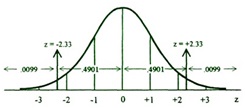
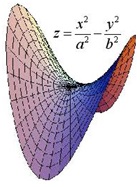 Students study calculus, complex analysis, functional analysis, analytic geometry, linear algebra, differential equations, equations of mathematical physics, probability theory, mathematical statistics, random processes, graph theory, mathematical logic, discrete mathematics, operations research, optimal control and numerical methods.
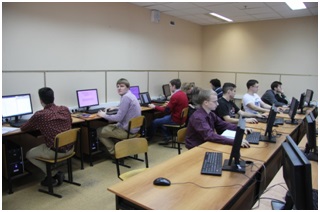
Computing plays a large part in the training. Students learn programming languages, operating systems and computer networks, databases, computer graphics and application software. They master modern programming technologies and standard application packages for solving practical problems, and learn to debug and test application software.
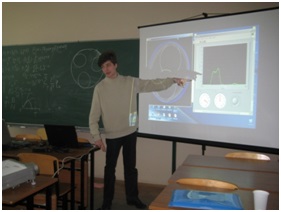
All students take part in research carried out at the department, at academic institutes and in research laboratories. The department works closely with major Russian and international companies, and together with institutes of the Russian Academy of Sciences and other organizations it has established a research and education centre for mathematical modelling.
Graduates with an aptitude for research can continue with postgraduate studies. Bachelor’s graduates, as well as graduates of other universities, can continue to a master’s programme; admission is competitive.
Graduates work wherever applied mathematics and computing are used: academic and research institutes, universities, government bodies, banks, insurance, financial and consulting firms, and Russian and international companies. The combination of deep theoretical training with active practical and research work under the guidance of lecturers and researchers makes them competitive on the job market.