
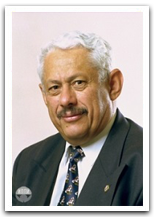
Academic supervisor
Academician of RAS,
Prof. Vladislav Pustovoit
The laboratory carries out theoretical and experimental research on creating a source and a detector of gravitational waves.
New methods of detecting gravitational radiation have been proposed.
Mathematical modelling of multi-beam Fabry–Pérot, Mach–Zehnder and Michelson interferometers with mirrors on free masses is carried out.
The laboratory works in gravitation and cosmology, relativistic electrodynamics, multi-beam interferometry, spectroscopy, nanotechnology, and cryogenic and vacuum technology.
The laboratory co-organizes the International Meeting “Physical Interpretations of Relativity Theory”
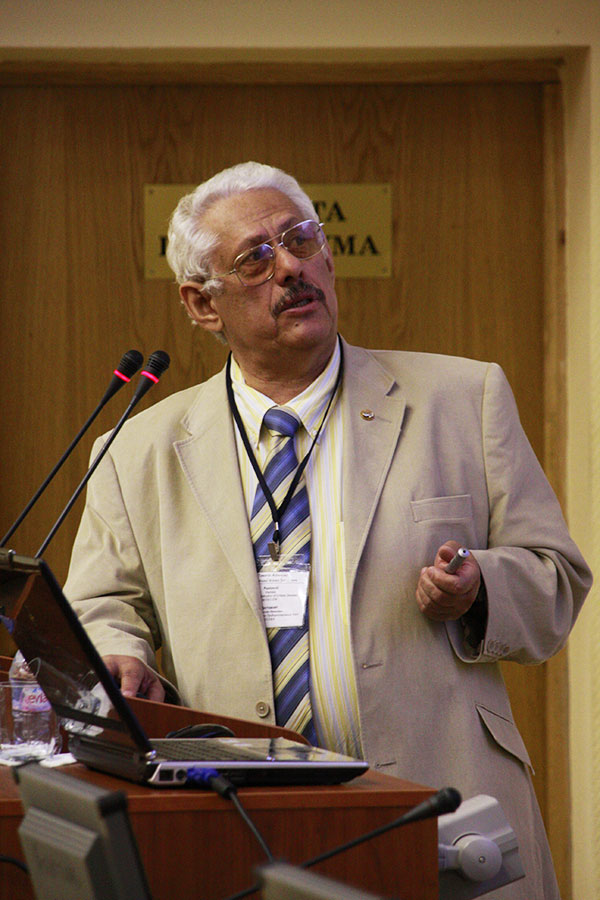
Talk “On the detection of gravitational waves” by Vladislav Ivanovich Pustovoit, Academician, Professor, Doctor of Physical and Mathematical Sciences, academic director of the Scientific and Technological Centre of Unique Instrumentation RAS, given at a meeting of the Bauman University Academic Council chaired by the rector, Professor Anatoly Alexandrovich Alexandrov.
Download the talk slides (PDF)
Academician Vladislav Pustovoit told the story of the scientific feat accomplished by Albert Einstein at the beginning of the 20th century, when he predicted that gravitational waves exist in nature alongside mechanical and electromagnetic waves. An equally important feat was achieved by American scientists who, in 2016, 100 years after Einstein’s prediction, detected gravitational waves.
In accessible terms, Academician Pustovoit explained what gravitational waves (GW) are, their physical nature and possible sources, how they can be detected, what detectors look like, the physical principle of detection and, finally, how sensitive a detector must be.
He also discussed the prospects of detecting GW and whether GW can be generated and detected in laboratory conditions on Earth.
What do GW mean for science and practice, and what are the prospects of GW research at Bauman University?
Einstein’s main idea about GW is that the metric of space and time is determined by the mass and energy within it.
Moving masses with enormous energy distort the metric of space and time; like electromagnetic waves, these distortions detach from their sources and propagate through space.
It is now firmly believed that if the quadrupole moment of a mass is non-zero and changes in space and time, i.e. oscillates, the metric of space and time oscillates in response, and these oscillations propagate at the speed of light. (slides 3, 5)
As V. A. Fock suggested in the 1940s, sources of gravitational waves are: (slides 9–32)
1. Binary stars,
2. Binary black holes,
3. Binary neutron stars, or a black hole and a neutron star
4. Various cosmological catastrophes:
collapse of binary star systems, explosions
of supernovae, etc.
Gravitational wave emitters are characterized by low frequencies and wide bands.
Methods of detecting GW
1. Resonant detectors (J. Weber, 1960) (slide 7)
The idea of resonant detectors is a massive bar of simple shape, cooled to a low temperature, in which a gravitational wave excites natural acoustic vibrations. Such antennas have never detected GW, but research on their possible use still continues in the USA.
2. Laser interferometers, proposed in the USSR as early as 1962 by Mikhail Evgenievich Gertsenshtein and Vladislav Ivanovich Pustovoit. (slides 9–32)
The idea of laser interferometers is to use the interference of laser light to measure tiny displacements of a mirror caused by a gravitational wave
It was shown that a laser gravitational antenna based on a Michelson interferometer with a 3–4 km baseline could reach a sensitivity of 10-17 cm, one ten-thousandth of the size of a proton.
Laser interferometers have now been built in the USA – LIGO (Livingston, Louisiana and Hanford, Washington), in Italy – VIRGO near Pisa, in Japan – TAMA-300 and in Germany – GEO-600.
In October 2015 the LIGO interferometers in Hanford and Livingston detected a GW. More precisely, they recorded a change in the frequency of the signal in the interferometer arms. Such a signal is called a chirp.
What the direct detection of GW means:
- Another major confirmation of general relativity,
- A new channel of information about the Universe (“a new window on the Universe”)
- Promoting science among young people
- Significant progress in measuring instruments and metrology, highly reflective coatings (mirrors), vibration isolation, extracting information at high noise levels, and more.
- Gravimetry and navigation by gravitational potential.
Bauman University carries out work on GRAVITATIONAL WAVE DETECTION (slides 36–41).
- A prototype laser interferometric antenna based on a new optical scheme (a double Michelson interferometer) with higher sensitivity and better signal-to-noise ratio is being developed (Prof. A. N. Morozov).
- Principles of generating and receiving high-frequency gravitational waves are being developed (Prof. V. O. Gladyshev).
What comes next in GW research and applications?
How often can such events be observed?
For binary black holes within a sphere of radius about several hundred megaparsecs
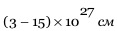 the rate of such events will be 3–100 per year for black hole masses up to 100 solar masses.
What fundamental results can be expected?
Tests of general relativity,
A new window on the Universe (a new channel of information).
How can the sensitivity of laser interferometric antennas be improved?
– New high-quality mirrors, a laser interferometer in space, an underground interferometer (the Einstein Telescope)
– The European Space Agency’s Laser Interferometer Space Antenna LISA (designed for ultra-low frequencies, with large masses as GW sources) (slide 33)
– A worldwide network of laser interferometric antennas (slide 34). Scientists assign a very important role to Russia, since its geographic position makes it a good site for a gravitational antenna that would join the network.
What other applications of laser interferometric antennas are possible?
Geology and geophysics: observing the dynamics of changes in the Earth’s gravitational field.